Buying the 2026 Nissan Ariya: What Early Owners Wish They Knew
Estimated Reading Time: 8–10 minutes
Key Highlights
- 2026 Nissan Ariya refresh overview
- Infotainment upgrade with Google integration
- Powertrain, battery options, and range performance
- Real-world owner feedback (range, efficiency, winter impact)
- Known issues and ownership risks
- Pricing in Japan
- Overview of Nissan Ariya NISMO
The Nissan Ariya has now been on the market for nearly four years since its debut, and it is entering a new phase. Nissan has introduced the refreshed 2026 Ariya in the Japanese market, bringing updates not only to exterior styling but also to the infotainment system, features, and suspension tuning. The model first appeared at the 2025 Japan Mobility Show, and Nissan has already released the full lineup for Japan, with launches in other markets expected in the coming months.
It’s important to note that this refresh is primarily aimed at right-hand-drive markets such as Japan and the UK. Meanwhile, the 2026 Ariya has been paused in the U.S. market, largely due to import tariffs, changes in EV incentives, and Nissan’s broader electrification strategy. For buyers in North America, this likely means that used Ariya models will become the more common option in the near term.
An EV That Feels Like a Traditional Luxury SUV
In terms of positioning, the Ariya has always been an electric crossover that feels closer to a traditional luxury SUV. Unlike many EVs that emphasize cutting-edge tech or aggressive performance, it focuses more on comfort, quietness, and a smooth driving experience. The 2026 model continues this philosophy while introducing subtle but meaningful upgrades.
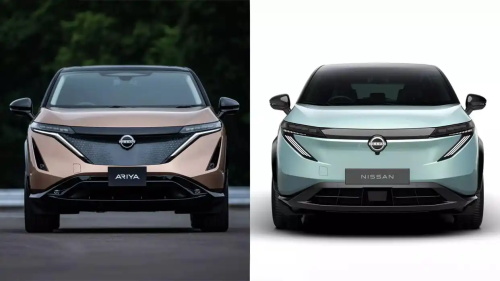
The most noticeable exterior changes are at the front. The new model removes the traditional grille entirely, adopting a cleaner closed-off front fascia that enhances its modern look. A redesigned front bumper, combined with more aggressive LED “fang-style” daytime running lights, gives the vehicle a sharper and more distinctive appearance. The headlights are updated to a new “7-shaped” design, with LED lighting units on top and integrated DRLs below. The central Nissan badge is now illuminated, adding a premium touch.
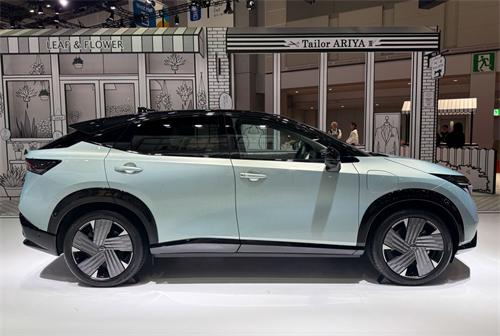
The side profile and rear remain largely unchanged, preserving the sleek crossover proportions. The rear continues to feature a full-width light bar, so overall, the design update is evolutionary rather than revolutionary.
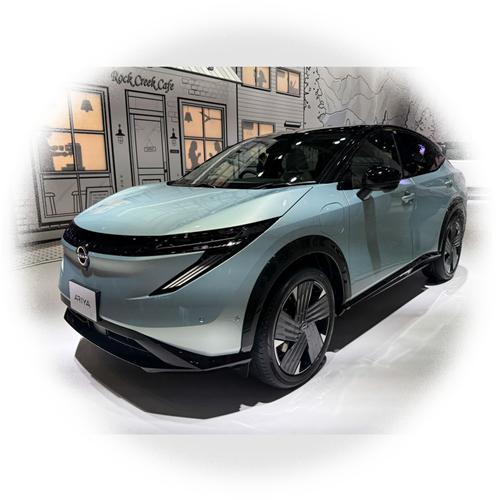
Additional exterior updates include new 20-inch aluminum–resin composite wheels, which are lighter and help reduce road noise. A new two-tone paint option called “Hisuinohikari” (Emerald Glow) has also been introduced, featuring a vibrant green body paired with black accents on the roof, pillars, and lower trim, creating a strong visual contrast.
Cabin Layout Stays the Same, but Tech Takes a Big Leap
Inside, the overall cabin layout remains unchanged, but the technology sees a major upgrade.
The NissanConnect system now runs on a Google-based software architecture, similar to Android Automotive. This allows native integration of Google Maps, Google Assistant, and the Google Play ecosystem, offering a much more seamless and intuitive experience compared to traditional in-house systems.
This upgrade directly addresses one of the most common complaints from existing owners: laggy performance and limited app support. With the new system, users no longer need to rely heavily on smartphone mirroring, as core functions like navigation and voice control are fully integrated.
New features include:
- Navi-Link Battery Conditioning (navigation-linked battery preconditioning)
- Intelligent Distance Control
- Remote vehicle functions
The remote control feature is particularly practical—allowing drivers to preheat the cabin in winter or cool it down in summer so that the vehicle is comfortable before you even step inside.
“Mobile Sofa”: Comfort Remains the Core Strength
Despite the tech upgrades, the Ariya’s defining characteristic is still its comfort. It continues Nissan’s tradition with its well-known “Zero Gravity” seats, combined with excellent sound insulation and soft suspension tuning.
The suspension is clearly tuned for comfort, effectively smoothing out road imperfections and making long-distance driving more relaxing. This is why many owners describe the Ariya as a “mobile sofa.”
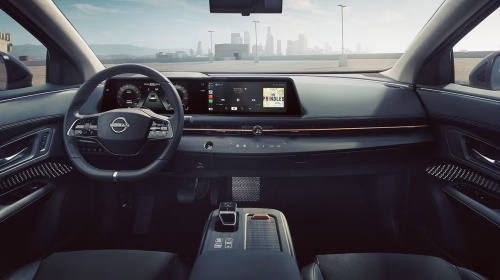
Interior materials have also been slightly refined, with a new combination of muted green leather and light gray trim, enhancing the cabin’s premium feel. The vehicle retains its 12.3-inch infotainment touchscreen, along with features like wireless charging, heated seats, and memory functions—balancing comfort and technology well.
V2L Power Output Expands Its Lifestyle Use
Another key addition to the 2026 model is V2L (Vehicle-to-Load) functionality.
This allows the car to supply power externally, with a maximum output of around 1500–1600W. In practical terms, this means you can power appliances like induction cookers, coffee machines, projectors, or laptops during camping trips or outdoor activities. Notably, the system can operate even when the vehicle is locked.
For users who enjoy road trips or outdoor lifestyles, this significantly expands the Ariya’s versatility.
Powertrain Remains Unchanged: Two Batteries, Two Drive Options
The powertrain carries over from the previous model, with no major mechanical changes.
The Ariya continues to offer both front-wheel drive (single motor) and e-4ORCE all-wheel drive (dual motor) configurations:
- Single motor: 160 kW or 178 kW
- Dual motor: 290 kW
Battery options include:
- 66 kWh (B6)
- 91 kWh (B9)
Under CLTC standards, range figures are listed at 501 km, 623 km, 559 km, and 533 km, depending on the variant. The larger battery version can exceed 600 km in ideal conditions, making it suitable for both daily commuting and longer journeys.
Real-World Owner Feedback: Stable, but Weather Matters
Based on owner data from 2023 to 2025, covering 20,000 to 55,000 miles, there has been no significant battery degradation, indicating strong reliability of the high-voltage battery system.
Some owners report that the 90 kWh version can achieve energy consumption as low as 13–14 kWh/100 km in city driving, enabling a real-world range close to 600 km. At highway speeds of around 120 km/h, the vehicle can still deliver approximately 450 km of range.
However, cold weather remains a challenge. In temperatures around 1°C, with heating systems in use, energy consumption can rise sharply to 33 kWh/100 km.
In extreme winter testing conditions—such as full load and highway driving—real-world range can drop significantly. For example, the 87 kWh version has been observed to achieve only around 275 km, roughly half of its rated range. Buyers should be prepared for this seasonal variation.
Known Issues from Early Owners
While the Ariya is generally well-regarded, early owners have identified some potential concerns.
One commonly reported issue is related to the 12V auxiliary battery, which can drain and lead to startup problems or trigger “EV System Off” warnings. In rare cases, inverter failures have also been reported, potentially causing a loss of power while driving.
In most cases, however, the issue is resolved by replacing the 12V battery and does not involve the main high-voltage system. Longer repair times are often due to limited parts availability, as the Ariya is not a high-volume model in many markets.
Who Should Consider the Ariya?
If you prioritize interior comfort, quietness, and seat quality, and mainly use your car for city driving with convenient charging access, the Ariya is a strong candidate.
However, if you’re looking for maximum acceleration or cutting-edge tech, alternatives like the Tesla Model Y or the Hyundai Ioniq 5 N may be better suited to your needs.
Pricing in Japan
In Japan, pricing for the 2026 Ariya is as follows:
B6 FWD base model: 6.6759 million yen
B9 e-4ORCE top model: 8.0729 million yen
This represents an increase of approximately 858,000 yen compared to previous versions.
Owner Tips Before Taking Delivery
Experienced owners offer several practical suggestions:
Schedule maintenance appointments in advance (some dealers have long wait times)
Consider rental or backup vehicle coverage (repairs may take time)
Regularly monitor the 12V battery condition
One simple but useful piece of advice from owners:
“Just drive it like a regular SUV—you’ll adapt quickly.”
Performance Flagship: Ariya NISMO
Nissan also offers a performance-oriented version, the
Nissan Ariya NISMO.
For 2026, this variant receives only a minor refresh, largely mirroring the updates of the standard model. Changes are focused on software and features, while performance and exterior design remain mostly unchanged.
Key updates include:
- Native Google-based infotainment system
- V2L functionality (~1500W output)
- Intelligent Distance Control
- Enhanced OTA update capability
The powertrain remains the sportiest in the Ariya lineup but sees no performance increase.
Importantly, the NISMO version is not sold globally. It is primarily available in Japan and select European markets, with pricing estimated between $57,000 and $70,000.
References
- Nissan Motor Co., Ltd. (2025). Nissan Ariya product updates and specifications. [https://www.nissan-global.com]
- AutoWeek. (2025, September 19). Nissan pulls the plug on the Ariya EV in US. [https://www.autoweek.com/news/a67963301/nissan-cancels-ariya-ev-in-us/?utm_source=chatgpt.com]
- HotCars. (2024). 2024 Nissan Ariya NISMO review. [https://www.hotcars.com/2024-nissan-ariya-nismo-review/?utm_source=chatgpt.com]
- Vision Mobility. (2025). Feel the thrill: Nissan debuts high-performance Ariya NISMO on World EV Day. [https://vision-mobility.de/en/news/nissan-ariya-the-nismo-is-back-starting-from-2025-336474.html?utm_source=chatgpt.com]
About the Author
Daniel Whitaker is an automotive analyst and EV industry researcher with over a decade of experience covering global vehicle markets. He holds a Master’s degree in Automotive Engineering and has contributed to multiple international publications focusing on electric mobility, consumer vehicle trends, and long-term ownership analysis.
Editorial Transparency Statement
This article is based on publicly available manufacturer data, auto industry reports, and aggregated owner feedback from recent years. No sponsorship or direct compensation from automotive brands influenced the content. All evaluations aim to provide a balanced perspective, including both strengths and potential drawbacks.
Recommended for you