I Spent a Week Driving the 2025 Jeep Avenger EV in Tight European Streets
Estimated Reading Time: 12–15 minutes
Key Highlights
- Trim breakdown: Longitude vs Limited vs Summit (same power, different lifestyles)
- Real-world city driving impressions in narrow European streets
- Actual energy consumption and realistic range expectations
- ADAS performance in complex urban environments
- Who should (and shouldn’t) buy the Avenger
For a long time, my impression of Jeep was tied to big dimensions, rugged character, and serious off-road capability. But after spending a full week driving the Avenger through European cities—especially those narrow, chaotic, sometimes borderline illogical old-town streets—I began to understand that this car was never meant to follow Jeep’s traditional formula. Instead, it feels like a deliberate adaptation to the realities of European urban life.
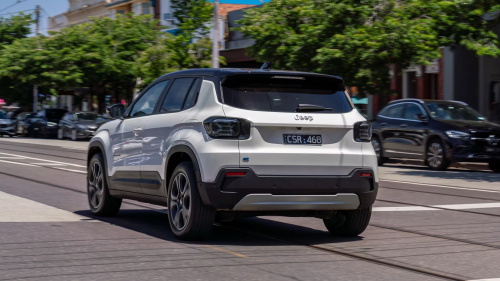
As Jeep’s first fully electric model, the Avenger isn’t the kind of vehicle you’d take deep into the wilderness. It’s a compact SUV designed very clearly for city use. And yet, visually, it still carries the brand’s DNA: the seven-slot grille, squared wheel arches, and chunky black cladding are all here—just compressed into a body that’s only 4.08 meters long. In a European context, that size feels almost perfectly judged. It’s small enough to navigate tight streets without stress, yet still retains the presence of an SUV.
Most of my driving that week took place in exactly the kind of environment this car seems built for: narrow lanes, unclear or nonexistent markings, parked cars squeezing both sides, and a constant mix of pedestrians, cyclists, and scooters. In that setting, a car’s size and ease of control matter far more than outright power—and this is where the Avenger starts to make a lot of sense.
Three Trims, but Really Just Different Ways to Live With the Same Car
The 2025 Avenger comes in three trims: Longitude, Limited, and Summit. At first, I expected at least some variation in performance between them—this is Jeep, after all—but the reality is quite straightforward: there isn’t any.
All versions share the same powertrain: a 115kW front-mounted electric motor paired with a 54kWh battery, with a claimed range of around 390 km. That consistency actually simplifies things. You’re not choosing between performance levels—you’re choosing how you want to experience the car day to day.
Longitude, the base model, already covers the essentials: LED headlights, 17-inch alloy wheels, an 8.4-inch infotainment screen, wireless CarPlay/Android Auto, and heated front seats. It comes with a 7kW onboard charger, which is slower, but perfectly adequate for everyday use. It’s a very honest, practical setup.
Limited adds a layer of comfort and convenience, including 18-inch wheels, leather seats, dual-zone climate control, wireless charging, and a 10.25-inch digital instrument cluster. It also improves parking assistance and upgrades the onboard charger to 11kW.
Summit, the top trim—and the one I drove—is essentially the fully loaded version. You get everything: unique wheels, full leather interior, heated front seats with a massage function for the driver, dual 10.25-inch displays, built-in navigation, keyless entry, and a hands-free power tailgate.
At around $60,990, I’ll admit I approached it with a slightly critical mindset. At that price point, expectations naturally rise.
A Small Car That Doesn’t Feel Small
On paper, this car isn’t much larger than a Volkswagen Polo. But the design does a surprisingly good job of masking that.
All the classic Jeep cues are present, giving it a sense of solidity and attitude that you wouldn’t normally associate with a car of this size. Driving it through cobblestone streets and tight alleyways creates an interesting contrast: physically compact, but visually assertive. It has a kind of “small but tough” personality that draws attention more than you’d expect during something as routine as a daily commute.
Interior: Not Luxurious, but Thoughtfully Practical
Once inside, what stood out to me first wasn’t the screens or the seats, but the storage.
There’s a large, magnetically covered compartment in the center console area, officially rated at 15 liters. I was skeptical at first, but in practice, it’s genuinely useful. My large thermos and even a small bag could be tossed in there without a second thought. It’s the kind of feature that feels less like a design gimmick and more like something born out of real everyday needs.
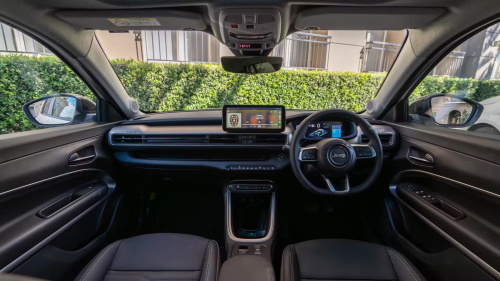
The front seats offer decent space, and the 380-liter trunk is well-shaped and adjustable in height, making it easy to load items like a stroller or carry-on luggage. For a car just over four meters long, that’s impressive.
Rear legroom, however, is a bit tight. Taller passengers will likely notice it, especially on longer trips. It’s more suitable for children or short journeys, which feels like a reasonable compromise given the car’s size.
One thing worth noting is that even in higher trims, there’s still a fair amount of hard plastic used throughout the cabin. At this price level, that does take away from the sense of luxury. That said, build quality is solid, and I didn’t notice any rattles or unwanted noises.
Driving Experience: The Real Keyword Is “Ease”
If I had to sum up the driving experience in one word, it would be “ease.”
That starts with the size. The compact dimensions, combined with a very light steering setup, make parking, turning, and navigating tight spaces almost effortless. In those narrow European streets—where you’re constantly negotiating space with oncoming traffic and parked cars—that sense of control significantly reduces stress.
The electric motor enhances this feeling. Acceleration is immediate and smooth, even in Normal mode, which is more than enough for city driving. There’s no hesitation, no waiting for power to build—it just moves when you ask it to.
The steering, however, is a bit of a mixed experience. At low speeds, the lightness is welcome. But as speed increases, it becomes somewhat vague, making it harder to feel what the front wheels are doing. Switching to Sport mode adds weight, but doesn’t fully resolve the disconnect. If you’re someone who values steering feedback, you might find this a bit lacking. But in urban driving, it’s rarely a dealbreaker.
Efficiency and Range: It’s More About Rhythm Than Numbers
My usage over the week was pretty typical: daily commuting, plus some casual city driving on weekends, without consciously trying to save energy.
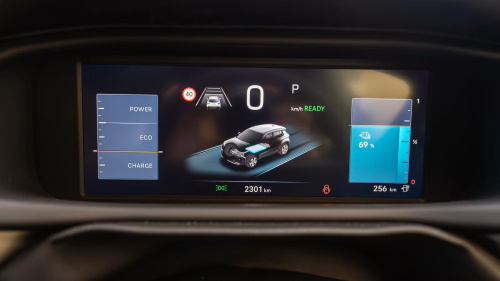
The average consumption came out to around 18kWh/100km. While the official range is 390 km (and the display shows close to 400 km when fully charged), real-world results suggest something closer to 274–354 km (170–220 miles).
But what stood out to me wasn’t the number itself—it was how easily the car fit into my routine.
I only needed to charge once that week.
And yes, it supports 100kW fast charging, but what really matters isn’t the “24 minutes from 20% to 80%” figure. It’s the fact that charging becomes something you don’t have to think about too much. I’d plug it in, go have a meal, and by the time I came back, it was ready to go again. That kind of seamless integration into daily life feels more meaningful than any spec sheet number.
I also found myself using the “B” mode (enhanced regenerative braking) most of the time. It’s not quite full one-pedal driving, but it significantly reduces the need to use the brake pedal, especially in traffic, making the whole experience more relaxed.
Ride and Refinement: A Mix of Pleasant Surprises and Honest Limits
In the city, the suspension tuning is actually quite impressive. It’s soft in the initial phase, effectively absorbing small bumps and imperfections, giving the car a sense of composure that feels a bit more “mature” than its size suggests.
However, over larger bumps or speed humps, the limitations become apparent. The rear suspension can feel a bit loose, sometimes accompanied by noticeable thumping sounds. In a top-spec model, that does stand out more than it should.
At higher speeds, wind and road noise also become more noticeable, especially above 70 km/h. The boxy shape doesn’t help aerodynamically, and the torsion beam rear suspension can make the rear end feel slightly unsettled over uneven surfaces. It’s not uncomfortable, but it reinforces the idea that this car is happiest in the city.
Driver Assistance: Good on Paper, Context Matters
The Summit trim includes Level 2 driver assistance features such as adaptive cruise control, lane centering, and traffic jam assist. On highways or well-marked roads, these systems work smoothly and predictably.
But in the kind of narrow, irregular urban environments I was driving in, they quickly reach their limits. Faded or missing lane markings, tight spaces, and unpredictable traffic participants make it difficult for the system to function reliably. It often disengages or behaves conservatively, sometimes issuing unnecessary alerts or interventions.
In those conditions, driving remains very much a human responsibility.
Off-Road Capability: More Reassurance Than Reality
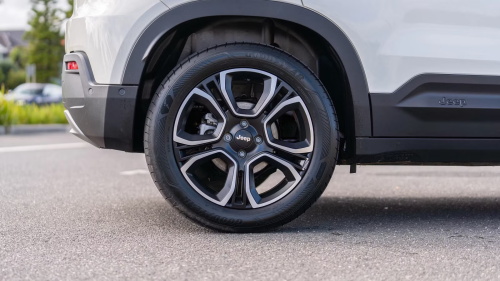
With 200 mm of ground clearance and multiple drive modes, the Avenger looks capable on paper. But as a front-wheel-drive vehicle, it’s not designed for serious off-roading.
That said, in everyday use—especially on rough city roads, construction zones, or cobblestones—that extra clearance does provide a sense of confidence and practicality.
So, Who Is This Car Really For?
If you live in a European city and your daily routine consists of commuting, school runs, grocery trips, and occasional weekend drives—and you happen to like that slightly rugged, “mini off-roader” aesthetic—then the Avenger makes a lot of sense. It’s distinctive, practical, and incredibly easy to live with in tight urban environments.
However, if you’re prioritizing value for money, a premium interior feel, or long-distance comfort, the $60,000 Summit might feel a bit hard to justify. In that case, the base Longitude trim arguably makes more sense—it offers the same performance and range, while saving a significant amount of money.
After a Week, What Stayed With Me Most
Before this, I was used to driving larger vehicles—cars with more power, more presence, and more features.
But after a week in these narrow streets, I realized something simple:
Sometimes, “good to drive” doesn’t mean faster or more powerful—it means easier, lighter, and less stressful.
And what this car gave me, more than anything else, was that sense of ease—the feeling that you can move freely, even in spaces that seem too tight to allow it.
At least for that week, that feeling was hard not to appreciate.
References
1. Stellantis. (2024). Jeep Avenger: Official specifications and features. Retrieved from [https://www.jeep.com]
2. Euro NCAP. (2023). Jeep Avenger safety rating report. Retrieved from [https://www.euroncap.com]
3. What Car?. (2024). Jeep Avenger review: real-world testing and ownership insights.
4. Autocar. (2024). Jeep Avenger EV road test and performance analysis.
About the Author
Daniel Foster is an automotive writer and EV analyst with over 8 years of experience covering electric mobility, vehicle performance, and consumer driving behavior across North America and Europe. He holds a Master’s degree in Automotive Engineering and has contributed to multiple international automotive publications. His work focuses on bridging real-world driving experience with technical analysis to help consumers make informed vehicle decisions.
Editorial Transparency Statement
This article is based on independent, real-world driving experience over the course of one week and reflects personal observations in typical European urban environments. No sponsorship, payment, or editorial influence was received from Jeep, Stellantis, or any affiliated organizations. All opinions expressed are solely those of the author.