Why the Toyota Crown Signia Is Changing the Sedan vs SUV Debate
Estimated Reading Time: 8–10 minutes
“Sedan or SUV?”
For the past two decades, this question has been almost a ritual dilemma for car buyers. Choosing a sedan meant prioritizing handling and efficiency, but sacrificing visibility and cargo versatility. Choosing an SUV meant embracing practicality and a sense of security, while accepting higher fuel consumption and less agile cornering. This binary choice has shaped a highly polarized market.
But what if the classification itself is outdated?
The dominance of SUVs over the past twenty years hasn’t come from perfection, but from being “good enough.” Their elevated ride height offers psychological security, vertical space enhances versatility, and marketing narratives amplify off-road fantasies. Data suggests that in 2024, global crossover sales reached approximately 3.4 million units, with an average transaction price of $45,000 and stable margins of 15–17%. Behind these numbers lies a homogenized market—every brand is essentially cooking the same dish with the same recipe.
The decline of sedans, meanwhile, isn’t due to failure, but because their advantages have been diluted by changing contexts. Better handling? Urban congestion limits its relevance. Better fuel efficiency? Hybrid SUVs have closed the gap. The real issue with sedans is “usage anxiety”—awkward ingress and egress, low visibility, and limitations in family-oriented practicality.
Interestingly, station wagons—arguably the perfect blend of sedan dynamics and SUV space—have never succeeded in the U.S. market. While Europeans drive wagons through the Alps, Americans navigate shopping mall parking lots in SUVs. The Subaru Outback stands as the only exception, proving that the concept isn’t flawed—the packaging is.
It is within this cognitive gap that the Toyota Crown Signia emerges. It is not a revolutionary new product, but a rebranded answer to an old question. Its significance lies not in groundbreaking specs, but in dismantling the decades-old “sedan vs. SUV” framework with a single product.
I. What Exactly Is the Crown Signia?

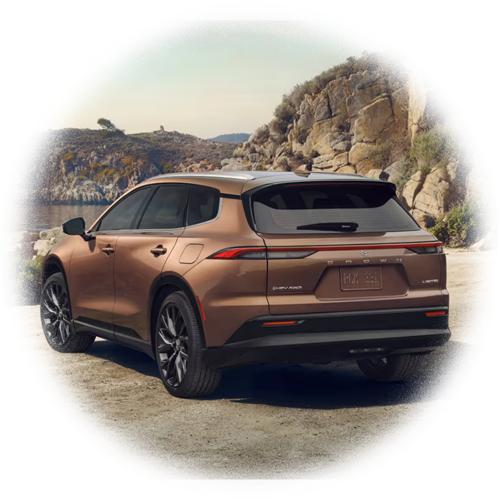
Toyota officially calls it a “crossover SUV.” But park it next to a Toyota RAV4 and take it for a drive, and that definition quickly falls apart.
The Crown Signia is best understood as a three-way fusion:
SUV functionality + wagon proportions + sedan driving dynamics
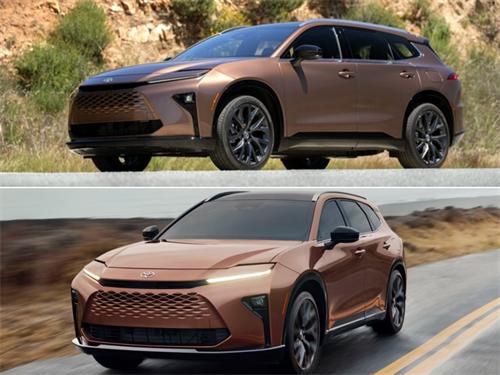
Its body height deliberately occupies a middle ground—higher than a sedan, lower than a typical SUV. This is not a stylistic whim, but a functional decision.
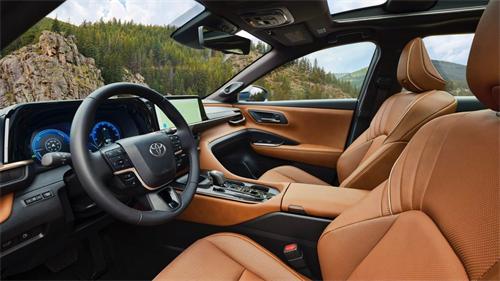
Comparing it to the Subaru Outback is revealing. The Outback succeeded by blurring categories: marketed as an SUV, but fundamentally a wagon. The Crown Signia follows a similar path, but pushes further into the premium space. Many reviewers describe its interior as “near Lexus-level,” with dual 12.3-inch displays, brushed rose-gold trim, and perforated leather—features that wouldn’t feel out of place in a Lexus NX.
The philosophical difference lies in proportions. The Outback retains clear wagon DNA; the Crown Signia adopts a sloping roofline and a more “shooting brake” silhouette. If the Outback is a tool for pragmatists, the Crown Signia is designed for those who care about aesthetics as much as function.
Within Toyota’s own lineup, the contrast is even clearer:
- Toyota Crown Sedan: low, elongated, business-oriented
- Toyota RAV4: upright, functional SUV
- Crown Signia: a hybrid form balancing both worlds
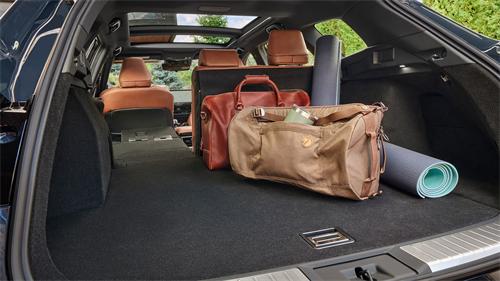
Sharing the same wheelbase as the Crown Sedan, the Signia expands cargo space from ~15 cubic feet to 25.8 cubic feet (without a sunroof), thanks to its wagon-style rear.
Its philosophy is simple:
Not maximum performance in one dimension, but balance across three.
II. Why Does It Exist?
Today’s SUV market is trapped in what could be called a “Cadillac Escalade-style arms race”—bigger size, more features, but diminishing differentiation.
Traditional SUVs carry inherent compromises:
- Higher center of gravity → more body roll
- Slower steering response
- Increased aerodynamic drag (0.33–0.35 Cd vs. 0.26–0.28 for sedans)
- 10–15% higher energy consumption at highway speeds
Most SUV owners never go off-road. What they actually need is occasional cargo flexibility—not extreme ground clearance.
Toyota recognized this mismatch:
The real battlefield for SUVs isn’t the wilderness—it’s the parking lot.
Sedans, on the other hand, suffer from usability friction:
- Difficult ingress/egress for families
- Limited forward visibility in SUV-dominated traffic
- Poor cargo accessibility
These aren’t unsolvable technical issues—they’re design choices. The Crown Signia’s answer is to retain sedan-like driving while eliminating these pain points.
III. From Binary Choice to Spectrum Thinking
The Crown Signia doesn’t take sides—it blends.
It represents what could be called a “Post-SUV Era Vehicle.”
Key attributes:
1. Moderate ride height
Comfortable entry without SUV instability
2. Low drag coefficient (~0.27 Cd)
Better efficiency and reduced wind noise
3. Wagon-style rear design
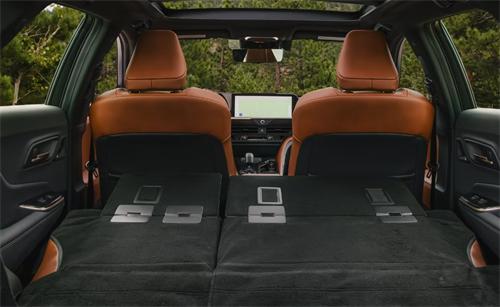
Up to 68.8 cubic feet of cargo space
4. Hybrid-first approach
~38 mpg combined fuel economy
This combination dismantles traditional categories.
When a car offers sedan-like efficiency, wagon-like space, and SUV-like accessibility, the question “What is it?” becomes irrelevant.
Toyota’s message is clear:
You no longer need to choose a category—you choose a lifestyle fit.
IV. Who Are Its Real Competitors?
The Crown Signia doesn’t compete in conventional segments.
- vs. Subaru Outback
Practical outdoor tool vs. urban premium crossover
- vs. Volvo V60 Cross Country
European design vs. lower cost + hybrid efficiency
- vs. Audi A4 allroad
Performance + brand vs. space + reliability
Its most interesting competition is internal:
- Crown Sedan → traditional comfort
- Crown Signia → lifestyle crossover
- RAV4 → functional SUV
- Toyota Highlander → family utility
Toyota is no longer segmenting by price—but by lifestyle.
V. What It Means for Consumers
The biggest shift isn’t more choice—it’s a new decision logic.
Old process:
> Budget → Segment → Brand → Features
New process:
> What balance of traits do you actually need?
The Crown Signia forces deeper reflection:
- Do you need ground clearance—or just easier entry?
- Do you need maximum cargo—or occasional flexibility?
- Do you want performance—or everyday ease?
This shift dissolves the “sedan vs. SUV” debate entirely.
VI. If It Succeeds, What Happens Next?
1. Rise of “non-SUV SUVs”
More brands will adopt similar crossovers
2. Return of wagons (under new names)
Rebranded as “crossovers” or “sport tourers”
3. Breakdown of SUV segmentation
From size-based to experience-based categories
4. Industry correction
From excess capability → “just enough, but better”
Toyota’s broader SUV lineup—RAV4, Highlander, Toyota Land Cruiser—already covers every niche. The Crown Signia exists not to fill a gap, but to correct an imbalance.
Final Insight
The Crown Signia is not anti-SUV.
It is a refinement of what SUVs were supposed to be.
Instead of pushing consumers toward more capability than they need, it offers something subtler:
A vehicle that is “just enough”—but genuinely better to live with.
And in doing so, it quietly ends a 20-year argument.
References
1. Autotrader. (2024). 2025 Toyota Crown Signia first look: A wagon by any other name. https://www.autotrader.com/car-reviews/2025-toyota-crown-signia-first-look
2. Edmunds. (2024). 2025 Toyota Crown Signia pricing and specs. https://www.edmunds.com/toyota/crown-signia/2025/
3. EPA. (2024). 2025 Toyota Crown Signia fuel economy. https://www.fueleconomy.gov/feg/Find.do?action=sbs&id=46227
4. Lorio, J. (2024, March 12). 2025 Toyota Crown Signia: The Crown estate America didn't know it wanted. Car and Driver, 70(3), 44-49.
5. Wakabi, M. (2024, March 28). Toyota's Crown strategy: Rebranding an icon for the crossover era. Automotive News, 98(7132), 22-26.
About the Author
Alexander Reeves, MSc Automotive Engineering
Alexander Reeves is an automotive industry analyst and former vehicle dynamics engineer with over 12 years of experience in global product development. He has worked with Tier 1 suppliers and consulted for OEMs in North America and Europe, focusing on platform strategy, vehicle architecture, and user-centered design. His writing explores how engineering decisions translate into real-world consumer experiences.
Editorial Transparency Statement
This article is an independent analysis based on publicly available specifications, industry reports, and observed market trends. It is not sponsored by, affiliated with, or endorsed by Toyota or any other automotive manufacturer mentioned.
All comparisons are made for informational and educational purposes. Vehicle specifications, pricing, and features may vary by region, model year, and dealership conditions.