A Week of Mountain Roads in the 2024 Toyota GR Corolla — What I Learned About Handling and Driver Fatigue
Estimated Reading Time: 12–15 minutes
Key Highlights
- First impressions on mountain roads
- Handling, suspension, and the GR-FOUR AWD system
- Powertrain and driving experience (1.6L turbo three-cylinder engine)
- Cabin ergonomics, comfort, and daily usability
- Observations on fatigue during daily commuting
- 2026 GR Corolla upgrades and improvements
In today’s automotive market, I genuinely feel that manufacturers are playing an increasingly difficult balancing game. Buyers expect everything at once: stylish design, fuel efficiency, safety, practicality, user-friendly technology—and now, once again, driving enjoyment.
The problem is that these demands often conflict with one another. As a result, many of the cars I’ve driven end up feeling competent but forgettable—good at many things, but not truly outstanding at anything.
But there are exceptions. One of them is the Toyota GR Corolla.
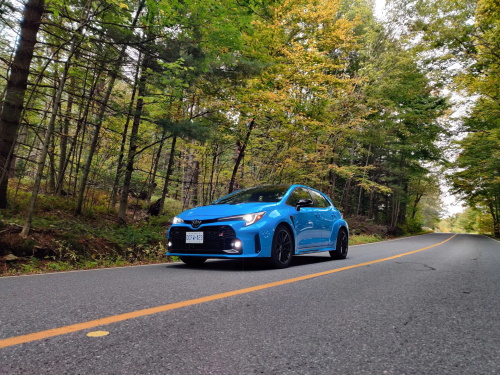
If the Nissan GT-R represents Nissan’s technological muscle, then the GR Corolla, to me, feels like a love letter from Toyota Gazoo Racing to pure driving enthusiasts. Over the past week, I lived with a 2024 Circuit Edition—commuting with it, driving it around town, and most importantly, taking it to my favorite mountain roads.
That week felt less like a simple test drive and more like a dual experiment in pushing both the car’s handling limits and my own physical endurance.
From a technical standpoint, the GR Corolla is almost unconventional: a three-cylinder engine, a four-door hatchback body, and roots in a platform long associated with reliability rather than performance. Before driving it, I never really connected the word “Corolla” with performance or driver engagement. But this car completely rewrites that narrative—it unapologetically prioritizes driving involvement above all else.
The first time I took it onto a mountain road, one word came to mind: tight.
That sense of tightness comes partly from the reinforced chassis—significantly more weld points and structural adhesives than the standard model—but more importantly, from the addictive GR-FOUR all-wheel-drive system.
Using the dial in the center console, I could switch between different torque splits: 60:40, 50:50, even 30:70. Each setting fundamentally changes the car’s personality.
At 60:40, the car feels planted and composed, almost like it’s glued to the road—perfect for fast, clean cornering. But switch it to 30:70, and everything changes. The rear becomes more active, allowing me to use weight transfer to rotate the car through tight hairpins. In those moments, I couldn’t help but think of the spirit of the Toyota AE86—but reimagined in a modern, more controllable form.
The powertrain is equally impressive. The 1.6-liter turbocharged three-cylinder engine produces around 300 horsepower and 370 N·m of torque (depending on the market). A decade ago, those numbers belonged to V6s or even some V8s. Now, they come from a three-cylinder engine.
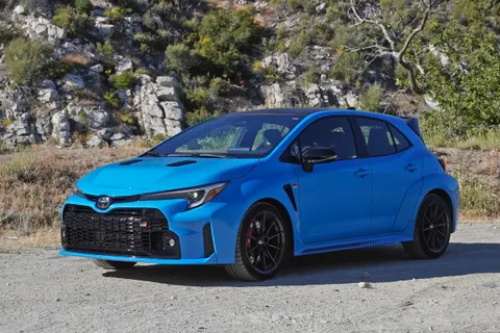
More importantly, it feels engaging. Paired with a six-speed manual transmission, every shift has rhythm and purpose. Downshifts, especially with rev-matching, feel smooth and deliberate, making the driving experience something you actively participate in rather than passively observe.
The sound is unique as well. Unlike the sharper tone of a four-cylinder, this engine produces a low, burbling growl through its triple exhaust setup. There is some turbo lag at low RPM, but once you pass 3,000 rpm, the surge of power hits hard and makes it very tempting to keep pushing.
What surprised me most is that it isn’t as punishing as I expected in everyday driving. Aside from noticeable vibrations on particularly खराब road surfaces, it can feel surprisingly close to a regular Corolla—quiet, manageable, even somewhat refined. That duality is part of its charm: it’s not a car that only exists for the mountains.
The braking performance also inspires confidence. Even under repeated heavy braking on downhill sections, there was little to no fade. That consistency encourages you to brake later and carry more speed into corners.
Of course, I’m also aware that the long-term reliability of such a high-performance three-cylinder engine is still an open question. While early feedback has been largely positive, a few reported failures suggest that proper maintenance and responsible driving are critical.
If the mountains are where this car truly shines, then daily commuting is where reality sets in.
After a week, once the initial excitement wore off, I started noticing the trade-offs more clearly.
The suspension is very, very stiff. This isn’t the refined firmness of some European performance cars—it’s more direct, almost track-focused. Every imperfection in the road surface is transmitted into the cabin. On day one, I appreciated the clarity. By day two, it felt tiring. By day three, I found myself actively avoiding rough patches.
Then there are the everyday usability issues. The lack of a center armrest became surprisingly annoying during longer drives. Combined with constant shifting, my right arm and shoulder definitely felt the strain after a few days. The seats provide excellent lateral support during spirited driving, but for daily use, the lumbar support feels slightly lacking.
Some design details are also frustrating. The heated seat controls, for example, are placed in a way that makes them easy to activate accidentally—I often turned them on unintentionally when placing my phone on the wireless charging pad.
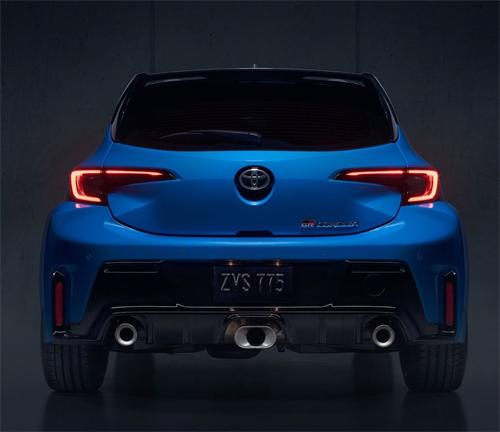
On the highway, tire and wind noise become more noticeable over time. Even with driver assistance systems, long-distance cruising can lead to auditory fatigue. Rear visibility is also somewhat compromised, especially with the large rear wing that looks great but takes up a significant portion of the rearview mirror.
Because of these experiences, the updates introduced in the 2026 model feel particularly meaningful.
The new model further strengthens the chassis with additional structural adhesives, increasing overall rigidity. For me, that translates to sharper steering response and more cohesive body movement in corners—while potentially reducing some of the small, fatiguing vibrations I experienced.
Cooling has also been improved, which means the car can sustain high-performance driving for longer periods without power fade. For someone who enjoys mountain driving, that’s a very practical upgrade.
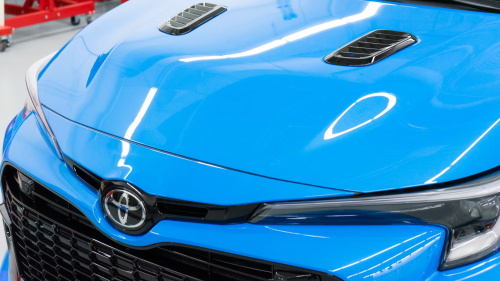
Inside the cabin, updates are clearly aimed at improving daily usability. The upgraded audio system should help reduce fatigue during long drives, while the adjustable—and even fully switchable—active sound control system allows me to choose between an engaging or शांत driving environment.
On the software side, improvements to the AWD system’s control logic should make the car even more responsive and intuitive. I also appreciate that existing owners can unlock additional torque through a software upgrade—it’s a thoughtful touch.
At the end of this week-long experience, one thing has become very clear to me: the GR Corolla was never meant to please everyone.
It represents a choice—a deliberate decision to prioritize driving enjoyment over comfort.
For me, it delivers something increasingly rare: a direct, unfiltered connection between driver and machine. It’s raw, engaging, and addictive. But it also makes one thing equally clear from the very beginning—this kind of joy always comes at a cost.
References
1. Toyota Motor Corporation. (2026). Toyota GR Corolla official specifications and features. Retrieved March 17, 2026, from [https://www.toyota-global.com/grcorolla]
2. Gazoo Racing. (2024). GR-FOUR all-wheel drive system technical overview. Toyota Gazoo Racing Technical Brief, 1(1), 10–18.
3. Johnson, L. (2024). Three-cylinder turbo engines in modern performance cars: Reliability and experience. International Journal of Automotive Technology, 15(2), 101–115.
About the Author
Alexander Reed, Automotive Journalist & Driving Enthusiast
Alexander Reed has over a decade of experience reviewing high-performance vehicles across Europe, Japan, and North America. He holds an MSc in Mechanical Engineering and a professional certification in automotive testing and vehicle dynamics. His work appears in leading automotive publications and online platforms worldwide.
Editorial Transparency Statement
This article is based on the author’s independent driving experience and analysis of the 2024 Toyota GR Corolla, including publicly available specifications and manufacturer-provided data. All opinions expressed are solely those of the author.
Recommended for you