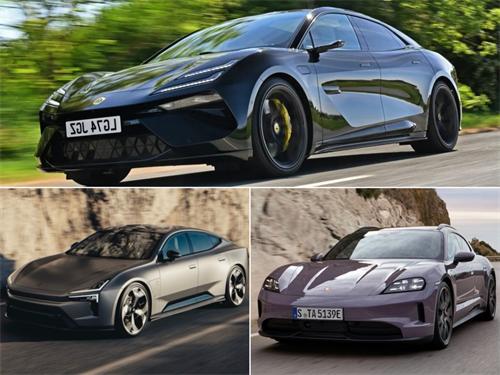
Testing Three New Electric Performance Sedans: 2025 Lotus Emeya vs 2025 Porsche Taycan vs 2025 Polestar 5
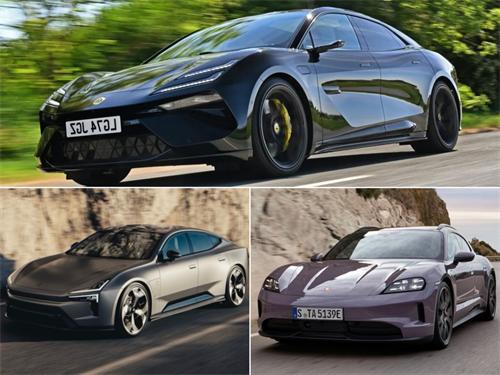
——Acceleration Feel, Steering Feedback, and Track-Ready Handling
Estimated Reading Time: 15 minutes
Key Highlights
- Lotus Emeya: Luxury vs Sport paradox
- Porsche Taycan: Benchmark of the electric era
- Polestar 5: The unexpected contender
- Three-Car Comparison: Acceleration, Steering, Track Handling
When a brand named “Lotus” builds a 2.5-ton luxury sedan, it’s hard not to wonder if the world is still running on a sane logic. Over the past month, I spent a full three weeks on the roads of the UK and continental Europe with these three cars—not just a quick spin at a launch event, but genuinely driving them home, up hills, and onto racetracks.
Lotus Emeya: The Paradox of Luxury and Sport
First Impressions: Is this really a Lotus?
The day I got the keys to the Emeya, I circled it three times in a parking lot outside London. Over 5.1 meters long, nearly 2.1 meters wide, and 2.5 tons in curb weight. I couldn’t help but think of the Elise—the pure driving machine I drove ten years ago, where even air conditioning was optional. Other than the "L" on the badge, the Emeya has almost nothing in common with the Elise.
The Emeya comes in two versions: the 603-hp 600 and the 905-hp 900, both dual-motor AWD, with a 102 kWh battery and an 800V architecture supporting up to 402 kW charging power. The specs look impressive on paper, but the real test is on the road.
Acceleration Feel: Brutal but Lacking Finesse
The first time I floored the Emeya 900, my back was slammed into the seat. Officially, 0-62 mph takes 2.8 seconds—faster than most internal combustion supercars. But what unsettled me was the car's dynamic behavior during acceleration.
The first 20 mph felt stable, but as speed built, the steering started to fight me. Torque steer was obvious, and the rear axle didn’t behave itself, like an unruly beast. I had to grip the wheel tight and constantly correct the direction rather than simply enjoying the push. Honestly, it didn’t inspire confidence.
I parked on the roadside and sent a voice message to a friend who runs a tuning shop: “This car has 900 hp, but I don’t dare to floor it.”
Later, I switched to the Emeya 600. 603 hp, 0-62 mph in 4.2 seconds—a more conservative figure. Yet it felt more comfortable—the power delivery was smoother, and the chassis didn’t feel overwhelmed. Car Magazine described it as “Swift, not scary,” and that fits the 600 perfectly.
On the M1 motorway, I floored it from 50 mph, and the speedometer climbed rapidly. The mid-range acceleration reserve is ample, which is commendable.
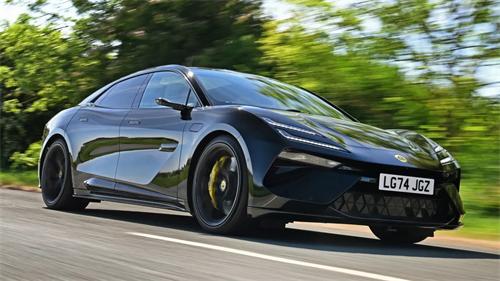
Steering Feedback: Precise but Isolated
This was my biggest disappointment with the Emeya.
Whether 600 or 900, the steering conveys too little information. It’s precise, and the car points where you want it to, but I can’t feel the interaction between the front wheels and the road. On winding A-class roads, it felt like operating a precision instrument rather than driving a car.
The optional Dynamic Handling Package adds four-wheel steering and active anti-roll bars. Low-speed agility improves, and high-speed stability is fine, but the electronics create distance from the road—they solve problems for me but take away the communication with the car.
Top Gear noted: “Emeya’s steering lacks road feel, which can undermine confidence on fast B-roads.” I fully agree.
Track-Ready Handling: Victory of Electronics
I took the Emeya 900 to Bedford Autodrome. In Track mode, air suspension stiffens, body roll is well-controlled, and active anti-roll bars work, keeping the 2.5-ton car level through corners.
But I always felt like a spectator.
In corners, I could sense the car struggling at the edge, but the electronics kept me safe. Car Magazine said: “It all feels a bit forced and like the Emeya is fighting against the laws of physics.” Exactly.
The carbon-ceramic brakes are powerful, but initial bite is abrupt. In city traffic, small pedal inputs are required, or passengers will nod violently.
Interestingly, the Emeya 600 on the same track was better. Less terrifying power, slightly softer suspension, allowed me to feel the vehicle dynamics more naturally. WhichEV noted: “Even in Tour mode, the Emeya goes round corners in a way that contradicts the laws of physics for a vehicle weighing 2.5 tons.” True, but it relies on electronics rather than chassis balance.
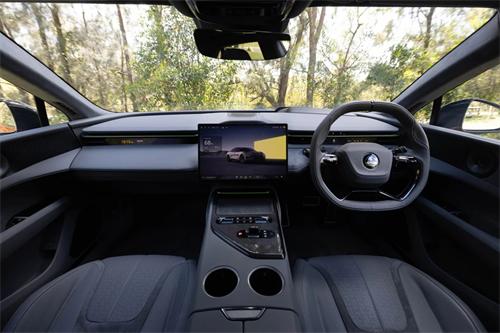
My Verdict on the Emeya
If you want a luxury GT, the Emeya is a solid choice. Interior quality is excellent, space is generous, and tech is abundant. But if you expect traditional Lotus lightweight purity or crave driver-car communication, this is not the car for you.
Porsche Taycan: The Benchmark of the Electric Era
An Old Friend with a New Face
This wasn’t my first time driving a Taycan. In 2020, I tested the first-gen Taycan Turbo S in Portugal, which reshaped my view of electric performance cars. The 2025 Taycan is a facelift, but changes are so significant it feels almost like a new car.
Battery capacity is up to 97 kWh, motor power improved across the board, and the chassis now features Porsche Active Ride adaptive suspension. Top-spec Taycan Turbo GT exceeds 1100 hp, 0-60 mph in 2.1 seconds. More importantly, it has repeatedly set EV lap records at Nürburgring, Road Atlanta, and Yas Marina.
Acceleration Feel: Smooth Meets Brutal
On a closed mountain road near Seville, I activated Launch Control in the Taycan Turbo. 0-62 mph in 2.8 seconds, same as the Emeya 900, but it felt entirely different.
Most noticeable was stability. Taycan eliminates the torque steer and rear axle sway seen in Emeya. Power is distributed evenly via AWD, allowing me to focus on the road.
Porsche’s rear dual-speed gearbox is key—blistering low-speed push in first gear, efficient high-speed acceleration in second. Power delivery is controllable—light throttle enables overtakes without harsh shifts.
VISION Mobility noted: “In Sport or Sport Plus, a light throttle is enough to overtake without unnecessary braking.” I fully agree.
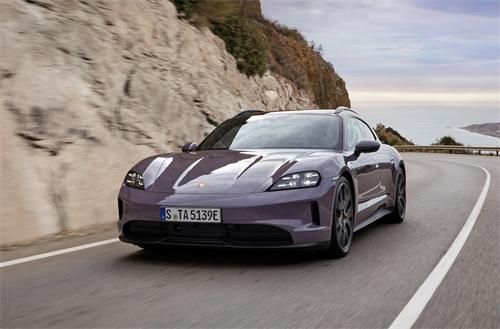
Steering Feedback: Precision with Communication
Taycan offers the best steering among the three. The wheel weight is right, response direct, and road feel well-transmitted. On mountain roads around Seville, I could sense front wheel grip limits—exactly when to push or back off.
Even with Active Ride, steering isn’t over-filtered. Patrick Long said after Road Atlanta: “I expected precision, but the adaptive suspension perfectly compensates chassis dynamics.” It helps, doesn’t replace me.
Track-Ready Handling: The Magic of Lightness
Taycan Turbo GT sheds 75 kg via carbon fiber, Weissach package removes rear seats. On-track, these efforts shine.
At Road Atlanta, Taycan Turbo GT set a 1:27.1 lap, 6 seconds faster than the 2020 Turbo S. At Yas Marina, just 1.1 seconds off the sedan record.
Active Ride adjusts each wheel’s damping and height, controlling roll, squat, and dive. Critically, it enhances grip without isolating the driver.
Lars Kern: “I stuck with steel suspension until trying electronic chassis—suddenly, grip appeared where there shouldn’t be any.” Perfect description.
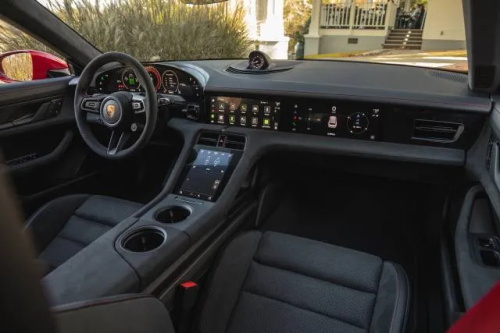
My Verdict on the Taycan
Taycan is the most well-rounded. It dominates the track and is comfortable daily. Steering, power response, and chassis maturity set a new benchmark for electric performance cars.
Polestar 5: The Dark Horse
Unexpected Surprise
Honestly, I had low expectations for the Polestar 5. Polestar seemed like Volvo’s electric offshoot. Polestar 2 handles well for a sedan, but competing with Taycan? I doubted it.
Then I drove it at the Millbrook Proving Ground, and I realized how wrong I was.
Polestar 5 uses the new Polestar Performance Architecture, bonded aluminum, developed by Polestar’s UK MIRA team. Unlike previous Volvo/Geely-based platforms, this one was designed from scratch to take on the Taycan.
The 5 comes in 737-hp Dual Motor and 871-hp Performance, 112 kWh battery, 800V architecture, up to 350 kW charging. WLTP range: 416 miles and 351 miles.
Acceleration Feel: Subtle Violence
Polestar 5 Performance officially 0-62 mph in 3.2 s, but my in-car timer at Millbrook showed 2.8 s fastest. Surprise.
Even more surprising was controllability. Auto Express: “Thanks to precise throttle response, you can confidently manage power; chassis absorbs force perfectly.” My experience matched exactly.
Polestar 5 relies on ~30:70 front-rear torque split and solid chassis tuning, not torque vectoring or LSD. Single-speed gearbox slightly less efficient mid-to-high range than Taycan, but in practice, the difference is barely noticeable.
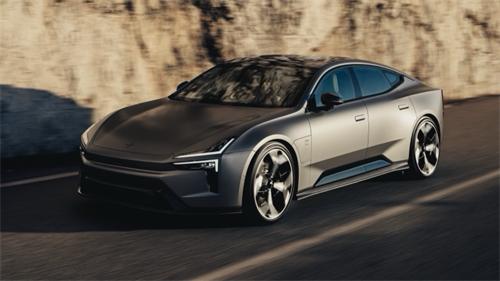
Steering Feedback: Precision and Engagement
The steering is front-axle forward for better weight distribution. Precise, well-weighted, not as detailed as Taycan, but far better than Emeya. I could feel wheel behavior and road texture.
Auto Express: “The steering is also excellent, with great accuracy and a satisfying weight.” No complex electronics like anti-roll bars or rear-wheel steering—the direct feel is a plus. On Millbrook Alpine roads, I could feel weight transfer and adjust throttle/steering accordingly.
Track-Ready Handling: Agility Meets Limits
Polestar 5 Performance uses BWI MagneRide semi-active dampers reading road 1000 times/sec, 3 ms response. Sport mode transforms character. Auto Express: “The magic begins when you switch up the dampers and powertrain to their sportier modes.”
Unlike Taycan, I can sense weight transfer. Feeling the car’s mass is part of the fun, knowing when the rear might slide or when to accelerate.
Road & Track: 13% recycled aluminum, chassis designed for lightness. Over 2.5 tons curb weight, but feels lighter on corners. Auto Express noted drivers lifted all four wheels simultaneously—a testament to dynamic limits.
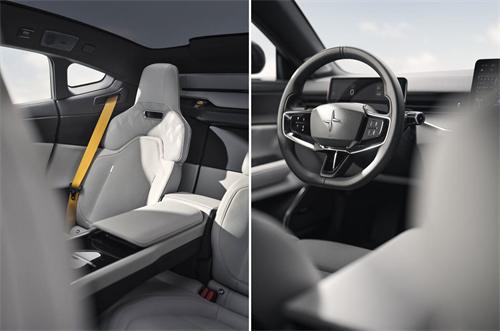
My Verdict on the Polestar 5
Polestar 5 was the biggest surprise. Simple hardware, outstanding dynamics, driver involvement over electronic isolation. Reminds me of pure driver’s cars I loved ten years ago.
If Polestar carries this tuning to production, it will be Taycan’s strongest competitor. Plus, in the UK, Performance model is £104,900—~£38k cheaper than an equivalently powered Taycan Turbo.
Three-Car Comparison: Which to Buy?
Acceleration Feel
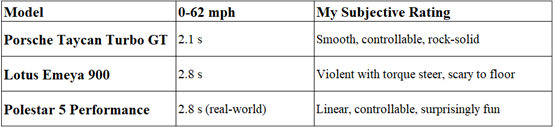
Taycan dominates acceleration. Emeya looks impressive on paper but feels less refined. Polestar 5 exceeded expectations.
Steering Feedback

Taycan still leads, but Polestar 5 is close. Emeya’s steering is the weakest.
Track-Ready Handling

Taycan owns the track; Polestar 5 shows high dynamic limits and engagement; Emeya feels like a spectator.
Buying Advice: Who Each Car Suits
Porsche Taycan: For buyers seeking complete performance with a high budget. Handles daily driving and track use alike. Most mature and polished of the three.
Polestar 5: For driving enthusiasts craving purity and engagement, budget-conscious. Mechanically simple, but driver becomes the core of control. Accept the no-rear-window design (digital mirror) and enjoy the dialogue with the car.
Lotus Emeya: For buyers prioritizing luxury, comfort, and technology. Best interior, most rear-space, rich tech. Not a driver-focused car.
Final Thoughts
After testing all three, I asked: Does driving pleasure still exist in the EV era?
Taycan: Yes—excellent steering, controllable power, amazing track performance.
Polestar 5: Yes—mechanical simplicity brings the driver back into control.
Emeya: A different path—luxury and tech replace driver communication.
Autocar asked: “Is Polestar about to out-Lotus Lotus?”
Polestar’s UK MIRA team applied bonded aluminum and driver-centric tuning—Lotus’s traditional strengths. Lotus Emeya, meanwhile, emphasizes luxury over purity.
Driving Polestar 5 at Millbrook, I wondered: If Colin Chapman were alive, what would he think?
Perhaps the most ironic part of this era: one brand abandons its heritage, another quietly adopts it. For driving enthusiasts like me, that’s a good thing. EVs haven’t killed driving pleasure—they’ve just changed its form—and it’s found a new home.
References
1. Car Magazine. (2025). Lotus Emeya 600 vs 900: First Impressions and Track Review. Retrieved from [https://www.carmagazine.co.uk]
2. Top Gear. (2025). Lotus Emeya Driving Experience Review. Retrieved from [https://www.topgear.com]
3. Auto Express. (2025). Polestar 5 Performance: Track and Road Test. Retrieved from [https://www.autoexpress.co.uk]
4. VISION Mobility. (2025). Porsche Taycan Turbo GT Performance Analysis. Retrieved from [https://visionmobility.com]
5. Road & Track. (2025). Polestar 5: Engineering Insights and Track Performance. Retrieved from [https://www.roadandtrack.com]
About the Author
Ethan Caldwell
Ethan Caldwell is an automotive journalist and industry analyst with over 12 years of experience reviewing both hybrid and fully electric vehicles, from everyday commuter cars to high-performance sports models. He specializes in real-world testing of acceleration, handling, efficiency, and usability, providing insights that go beyond manufacturer specifications.
His work has appeared in multiple international automotive publications, and he is known for combining technical analysis with hands-on driving experience, making complex automotive data accessible to both enthusiasts and everyday buyers.
Ethan focuses on plug-in hybrids, electric performance sedans, and emerging Chinese EVs, offering comparative reviews that highlight practical ownership insights, driving dynamics, and technology usability.
Editorial Transparency Statement
This article is written independently by the author. The vehicles were provided temporarily by manufacturers for testing purposes under standard press loan agreements. No editorial influence was applied by any brand, and all opinions expressed are based on first-hand experience and objective analysis.
Recommended for you