I Took the 2025 BMW iX1 Through a Week of City Traffic — My Real Charging and Range Experience
Estimated Reading Time: 12–15 minutes
Key Highlights
- Winter vs. summer performance: Cold weather significantly increases energy consumption
- Energy efficiency: As low as 12.7 kWh/100 km in urban driving
- Highway reality: Range drops ~40%, requires planning
- Weak points: Charging speed inconsistency and conservative software experience
- Best use case: Urban commuting with occasional short-distance travel
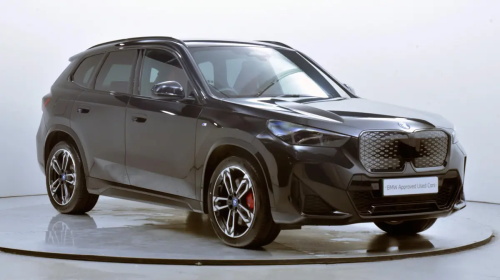
To start with the conclusion: the battery performance exceeded my expectations in terms of stability. The iX1 lineup comes equipped with a roughly 66.5 kWh ternary lithium battery. After a week of driving, the most intuitive feeling can be summarized in one phrase: “solid range, peace of mind.” During daily commuting, the drop in the indicated range generally matches the actual distance driven in a 1:1 ratio. Sometimes, there is even a “reverse overestimation” phenomenon—where the display shows a drop of 20 km, but the car has actually covered 22 km. This sense of “what you see is what you get” provides the first line of defense against range anxiety.
Daily Urban Commuting Experience
My commute is primarily in the city, spanning both winter and early spring. From early November to mid-March, average temperatures ranged between -5°C and 5°C, during which winter energy consumption was noticeably higher than in other seasons. Using 80% battery as a baseline, for a daily round-trip of 60 km in city traffic, even with the air conditioning on during summer or autumn, it is possible to go five days without recharging, with the battery still maintaining 15-20% by Friday evening—weekend charging is sufficient. Winter conditions are different: with the cabin temperature set to around 26°C, the vehicle typically requires recharging every 2-3 days. On winter drives, watching the remaining charge on the central display makes the depletion feel faster. This heating behavior differs greatly from internal combustion vehicles, which use engine waste heat; in the iX1, PTC resistance heating draws a significant amount of power. Once in the car, the heater is turned on immediately to maintain a comfortable cabin temperature. While slightly inconvenient, adapting to this routine is not difficult.
According to home charger records, scheduled charging via the central console, starting at 11 PM, reaches 80% by around 3-4 AM. For ordinary home AC chargers, this speed is acceptable, and the process is very convenient—plug in the car the night before, set the schedule, and the car automatically charges without any user intervention. Winter energy consumption being higher is not unusual; it is akin to noticing your smartphone battery draining faster in cold weather. BMW electric vehicles also reportedly feature a “tech trick”—reverse range overestimation—but since I rarely allowed the battery to drop below 15%, I cannot confirm the existence of any hidden reserve energy.
Unlike combustion vehicles, EVs do not have engine heat, and the iX1 uses a PTC resistive heater, which consumes a substantial amount of electricity. In winter, this increases charging frequency from once a week to every 2-3 days. However, this is common to all EVs and not unique to the iX1. Even without using the heater, low outdoor temperatures significantly affect battery performance. On winter highway trips, mid-route charging at service areas is recommended to ensure comfort. Outside of winter highway driving, however, the iX1 can handle a 200 km highway stretch without concern.
If I were to rate it out of 100 points, I would give the iX1 a 95 for urban commuting.
Energy Consumption and Trip Data
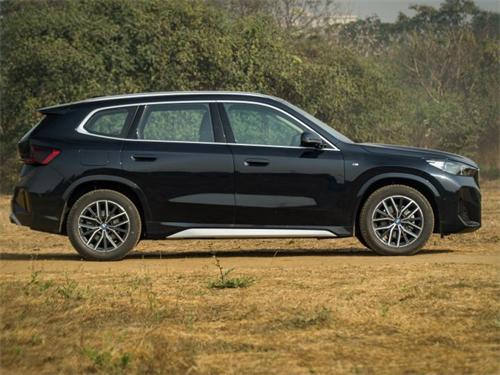
The iX1’s central console provides single-trip energy data, which is highly intuitive. For instance, on March 26, during a mid-trip check, after driving 12 km in 32 minutes, energy consumption displayed as 18.2 kWh/100 km. Completing the 29.6 km trip in 51 minutes resulted in 12.7 kWh/100 km. From the 80% charge on March 22, a total of 201.2 km was driven over 9 hours and 10 minutes, averaging 13.2 kWh/100 km. The driving route consisted of moderately congested city streets and elevated highways, demonstrating the iX1’s excellent energy management performance.
Driving and Handling Experience
The iX1’s paddle-style central console simplifies many operational steps. Before leaving the car, simply turning off the ignition automatically engages the parking brake and switches to P, offering an experience comparable to combustion vehicles. NVH (noise, vibration, harshness) and sealing are slightly inferior to a BMW 5 Series, but compared to the i3, I prefer the iX1’s driving feel. The trunk is spacious, rear seats can fold at a 42:42 ratio, and transporting long items is highly flexible. The Harman Kardon sound system delivers excellent audio quality, satisfying music enthusiasts like myself.
Regenerative Braking System
The iX1’s regenerative braking system is a feature I went from “barely adapting” to genuinely enjoying. When activated, it automatically adjusts the regeneration intensity based on the distance to the vehicle ahead and navigation data. Upon approaching a turn or when the lead vehicle decelerates, lifting off the accelerator linearly increases regenerative force, enabling smooth deceleration. Often, there is no need to use the brake pedal, achieving true one-pedal driving without abruptness. Even in the weakest mode, the vehicle glides smoothly, and for drivers transitioning from ICE vehicles, the learning curve is virtually zero. In city stop-and-go traffic, this system silently recaptures kinetic energy on every deceleration, contributing significantly to my observed low consumption of 12.7 kWh/100 km.
Chassis and Interior Space
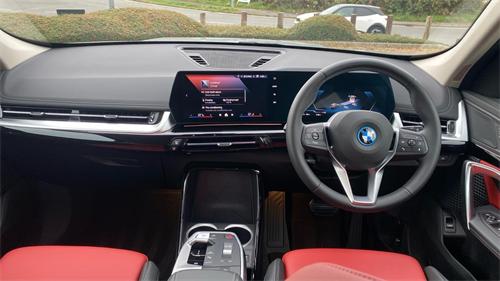
Although the iX1 is a compact SUV, it does not feel cumbersome to drive. The chassis is solid, and the suspension—though some may find it slightly firm—provides strong support when cornering. Steering is precise, offering agility comparable to a well-planted hatchback. Notably, iX1 achieves spaciousness without sacrificing nimbleness. A 2802 mm wheelbase provides over two fists of rear legroom, and trunk capacity of 490 L expands to 1600 L with the rear seats folded, demonstrating an “inside-out” design ideal for urban scenarios.
Highway Performance
At 120 km/h cruise speed, energy consumption rises to 19-25 kWh/100 km, reducing range by roughly 40%. In a full highway test covering 359.7 km, battery dropped from 100% to 13%, with an effective efficiency of 5.99 km/kWh, equivalent to 16.7 kWh/100 km. Full charge highway range is approximately 372-380 km. Despite reduced range, chassis stability and cabin quietness remain high, and overtaking power is sufficient; it simply requires planning the trip rather than driving casually.
Charging Convenience
The official fast-charging claim of 10%-80% in 30 minutes generally takes around 40 minutes in practice. Peak charging power rarely reaches 130 kW+, with most public fast chargers maintaining 60-75 kW. Charging the last 20% after 80% is significantly slower, making the most efficient daily strategy to charge up to 80%-90% and depart. Heavy reliance on public chargers may exacerbate “charging anxiety,” whereas a home charger allows for overnight charging and a fully charged start every day, offering convenience and cost-effectiveness for urban EV life.
Software and Intelligent Features
BMW navigation now supports traffic light countdowns. Following the on-screen countdown helps plan speed more efficiently, reducing unnecessary acceleration and braking, saving energy and providing peace of mind.
Feedback from Other Owners
Other owners have reported that the iX1 offers reliable range. In temperatures between -5°C and 5°C, charging to 80% covers daily commutes of 60 km, though winter requires charging every 2-3 days. Urban-highway mixed driving, with air conditioning and music, can exceed the official 510 km range on low-spec eDrive25L versions. The regenerative system intelligently recovers energy on downhill or braking, stabilizing range over time. Rear seat space is highly appreciated, with the center seatback foldable to create a 1.8 m × 1.2 m bed for camping.
Some owners experienced issues with fast-charging ports, cover malfunction, or reduced winter battery efficiency down to 60% of rated range (~306 km), increasing charging frequency. Though capable of 30-minute fast charge to 80%, traffic delays in summer can reduce charging efficiency. Home chargers with at least 7 kW power are recommended. The iDrive 9.0 system still requires optimization—CarPlay is outdated, navigation can lag, and voice recognition is dialect-sensitive; Android users may find it less convenient. On lower trims (25L), Harman Kardon audio is optional and requires high-quality sources to reach full potential.
In terms of driving, handling is stable, comfort is good. xDrive30L dual-motor AWD offers 313 hp, 0-100 km/h in 5.6 seconds, with ample power for overtaking on highways and mountain roads. eDrive25L single motor 204 hp is sufficient for daily commuting but slightly underpowered for overtaking. Multi-link independent rear suspension combined with MacPherson front suspension absorbs bumps effectively. Faux-leather seats are well-wrapped, with adequate support for long drives. Driver seat is electrically adjustable, second-row backrest is adjustable, and physical buttons for mirrors are retained, simplifying operation. Features like automatic climate control and anti-pinch windows improve usability.
The iX1 lineup offers two powertrain options with significant impact on range:
- eDrive25L Single-Motor FWD: CLTC range 510 km, battery 66.45 kWh, 14.2 kWh/100 km, 10%-80% fast charge ~0.53 h.
- xDrive30L Dual-Motor AWD: CLTC range 450 km, battery 66.45 kWh, 16.3 kWh/100 km, 10%-80% fast charge ~0.53 h.
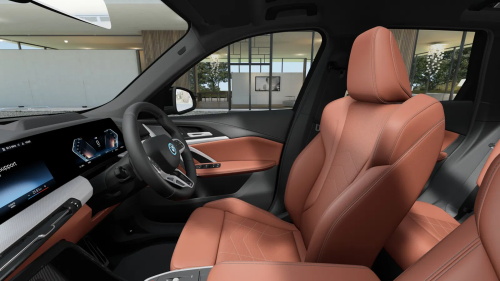
The AWD model consumes more energy due to higher power output (313 hp vs. 204 hp), reducing range by approximately 60 km.
Final Evaluation
After a week of testing, I believe the BMW iX1 is not a perfect electric vehicle, but it is a perfect “BMW” EV. It excels in the most critical areas—battery stability, energy management, and driving enjoyment—providing a fun and reassuring experience. In terms of smart features and equipment richness, it is relatively conservative. If you have a home charger, primarily drive in the city, occasionally take short trips, and want a prestigious, enjoyable, and cost-effective SUV, the iX1 is undoubtedly a vehicle that becomes more rewarding the more you drive it.
References
1. BMW Group. (2024). BMW iX1 technical specifications and features. Retrieved from [https://www.bmw.com]
2. EV Database. (2024). BMW iX1 real-world consumption and range data. Retrieved from [https://ev-database.org]
3. Transport & Environment. (2023). Real-world EV efficiency and charging performance report. Brussels.
About the Author
Daniel Foster is an automotive writer and EV analyst with over 8 years of experience covering electric mobility, vehicle performance, and consumer driving behavior across North America and Europe. He holds a Master’s degree in Automotive Engineering and has contributed to multiple international automotive publications. His work focuses on bridging real-world driving experience with technical analysis to help consumers make informed vehicle decisions.
Editorial Transparency Statement
This article is based on first-hand driving experience combined with publicly available technical data and aggregated owner feedback. No sponsorship or financial incentives were received from any automotive manufacturer or third party. All opinions expressed are independent and intended to provide an honest, real-world perspective for readers.
Frequently Asked Questions (FAQ)
1. How fast does the iX1 charge in real life?
While officially rated at 30 minutes (10–80%), real-world charging often takes around 40 minutes, with typical power levels between 60–75 kW.
2. Do I need a home charger to own an iX1?**
While not mandatory, a home charger significantly improves convenience and reduces charging anxiety, especially for daily commuters.
3. Which version should I choose: eDrive25L or xDrive30L?
The eDrive25L is more efficient and suitable for city driving, while the xDrive30L offers stronger performance and AWD capability but with slightly reduced range.