A Week Driving Three New Electric Crossovers: 2025 Volvo EX30 vs 2025 Smart #1 vs 2025 Kia EV3
——Urban Driving Comfort, Charging Habits, and Real-World Range Experience
Estimated Reading Time: 12 minutes
Key Highlights
- Why These Three Cars?
- Testing Method: Urban Driving Scenarios
- 2025 Volvo EX30 – Single Motor Extended / Plus
- 2025 Smart #1 – Premium
- 2025 Kia EV3 – Long Range / Earth
- Final Conclusion: Comfort, Charging Ease, and Real-World Range
- Recommendations for Different Urban Drivers
Over the past week, I rotated driving three of the most popular small electric crossovers as my only vehicle, completing all daily trips.
Why These Three Cars?
In recent years, the small electric crossover market has suddenly become extremely crowded, but there are actually very few models worth comparing directly.
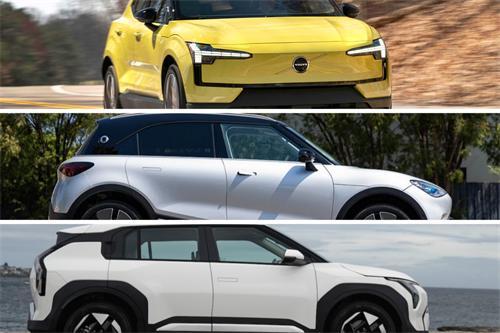
I ultimately chose the Volvo EX30, Smart #1, and Kia EV3 as the subjects for this week-long deep dive, not because they are “popular,” but because they each represent one of the most typical development directions in today’s small electric SUV market.
First, the Volvo EX30 is a typical “entry-level luxury EV”—built on the Geely SEA platform, the same as the Smart #1, but emphasizing the combination of brand, safety, and performance. Its existence essentially answers the question: Can a luxury brand make a truly city-friendly small EV?
The Smart #1 takes a completely different approach. It is no longer the old “micro commuter car” but has transformed into an electric crossover emphasizing design, technology, and personal expression. With 200 kW-class power, trendy interior, and relatively affordable pricing, it has become popular among young users. It is more about answering: Can an EV be both fun and practical?
Finally, the Kia EV3 looks the most “low-key” among the three, but it may be the most critical one. It represents another philosophy—making an EV a true daily tool. With a larger battery, higher range (up to around 600 km), and a design that emphasizes space and efficiency, it clearly walks a different path in terms of practicality.
In other words, these three cars are worth comparing not because they are similar, but precisely because they are different. This is a true reflection of the current competition in small electric crossovers.
My Week of Testing
Over the week, I drove each vehicle through common urban road conditions for comparison:
- Morning rush hour congestion (0–20 km/h, stop-and-go traffic) + urban expressway (60–80 km/h)
- Weekend shopping / picking up children: weaving through narrow parking lots, low-speed U-turns, installing child safety seats in the rear, and topping up at fast chargers while shopping or having lunch
To avoid a “half-day conclusion” style review, I set up a more realistic test: each car was used as my only vehicle for at least 2 full days.
To make the three cars’ experiences comparable, I controlled variables as much as possible:
- Air conditioning always on (essential for city use)
- Driving mode mainly set to “default/comfort”
- No deliberate energy saving, no overly aggressive driving
- Charging whenever battery dropped below 20%, recording how far each could go without changing normal driving habits
The goal: compare which is most suitable for real city life—which drives most comfortably, which is easiest to charge, and which has the most reliable real-world range.
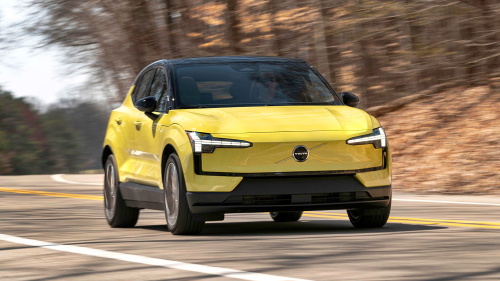
2025 Volvo EX30 – Single Motor Extended / Plus
Price: EX30 Twin Motor Plus about $40,195, clearly positioned as an entry-level European luxury EV
Urban Driving Comfort
Accelerator response is very linear, feeling like a gasoline car. Although the single-motor 200 kW variant has strong power reserves, in stop-and-go traffic, the output is controllable, without sudden “jerk,” which is friendly to passengers prone to motion sickness.
The chassis has typical European style: firm but compliant. Road feel is clear, cornering support is good, minor road imperfections are absorbed in one pass. On consecutive rough surfaces or speed bumps, the short wheelbase causes slight body sway but no excessive bouncing.
Absolutely a city weapon. A 5.4 m turning radius makes U-turns and navigating narrow streets extremely easy. Steering has three modes—from “finger-light” to “sporty and stable”—weight can be customized, very pleasing.
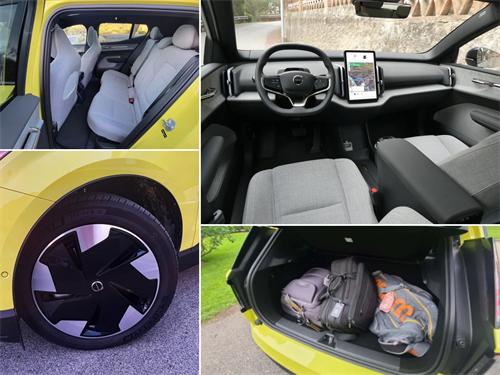
Although it uses single-pane glass, as a Volvo, the NVH (Noise, Vibration, Harshness) control is deep. Urban noise isolation is good; highway wind noise is noticeable.
Charging Habits & Real-World Range
Fast charging performance is good, 10–80% takes about half an hour. Real-world range is solid, no need to frequently check battery. “Charge as needed” is easy; can top up while shopping or eating, no need to hunt for chargers. For daily commutes under 50 km, a weekly charge is sufficient.
Real-World Range
Motor response is sensitive, giving some initial surge, so in frequent start-stop traffic, consumption is slightly higher than same-class family EVs.
Short city trips (10–15 km, multiple starts/stops): ~16–17 kWh/100 km
Highway cruising efficiency is stable; aggressive driving may reduce range 10–15%
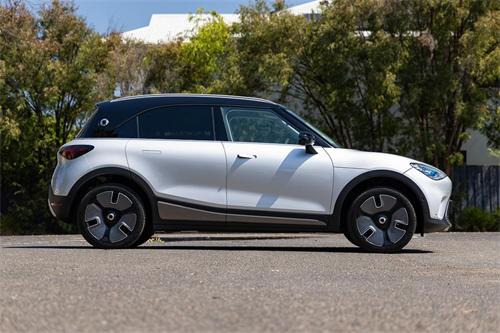
2025 Smart #1 – Premium
Price: Europe/global about €40k (~$43k), focusing on design, technology, and young-user experience
Urban Driving Comfort
Power response is active, but initial brake pedal is slightly hard; frequent braking in the city requires adaptation. Vehicle rhythm control is not as smooth as EX30.
Steering is light, body is small, very agile—traditional advantage.
Chassis leans toward comfort; 235 mm tires provide good grip and stability. Compared to EX30, it filters more road info, feels more like a conventional larger car.
Frameless doors look nice, but wind noise is noticeable above 80 km/h.
Charging Habits & Real-World Range
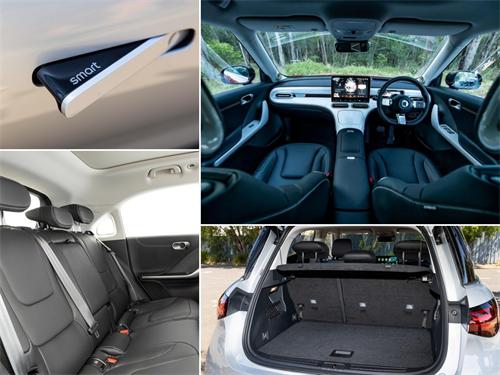
400V architecture, fast charging speed is moderate. For daily city commutes under 50 km, a weekly charge is enough. On long trips, highway ~200 km requires charging; planning is needed.
Real-World Range
Small body, linear power, slightly lower energy use in congestion than EX30.
Battery is relatively small, so daily range feels tight.
Official 400 km standard range, actual mixed conditions ~280 km (70% of nominal).
Highway with AC: less than 300 km
Energy consumption: 13.8–18 kWh/100 km
Public fast charge max 135 kW, 10–80% ~30 min
2025 Kia EV3 – Long Range / Earth
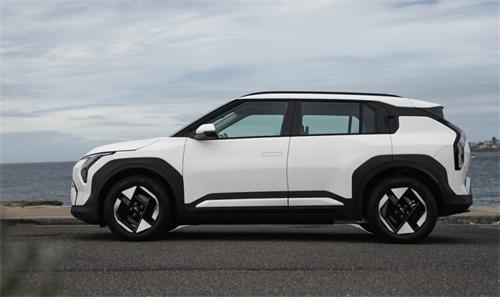
Price: ~$38k (high trim near $40k), focuses on comfort and practicality, ideal for urban families
Urban Driving Comfort
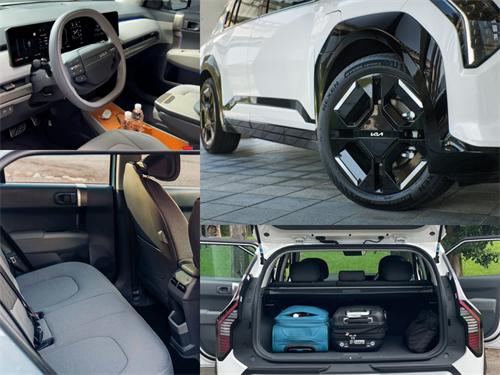
Extremely easy at low speeds. Top feature: iPedal adaptive regen paddle, supports single-pedal mode and “adaptive mode,” automatically adjusts regen based on front vehicle distance. In city, almost can drive using only the accelerator, reducing right-foot fatigue.
Suspension softest among three; filters road bumps effectively. Feels like a mobile living room, fully prioritizing comfort.
Excellent visibility due to low dashboard. Steering feels slightly heavy but precise. Turning less flexible than EX30, but manageable.
As World Car of the Year, noise control expected better than Smart #1.
Charging Habits & Real-World Range
Most worry-free charging. Long-range 81.4 kWh battery supports 127.5 kW fast charge, 10–80% in 31 min, meaning a restroom or coffee break is enough.
Daily commute under 50 km: one weekly charge easily.
Real-World Range
Motor efficiency and vehicle energy consumption excellent. Even in traffic, AC on, and highway cruising, range stays strong.
Large battery + low drag + heat pump ensures stable performance.
Short city trips: 15–16 kWh/100 km
Public fast charge max 170 kW, 10–80% ~30 min
Final Conclusion
Urban Driving Comfort – Smoothest Ride?
- EV3: Smoothest, iPedal adaptive mode allows almost single-pedal driving in traffic, soft suspension absorbs bumps
- EX30: Firm chassis, precise steering, suited for those seeking driving engagement and brand feel
- Smart #1: Agile, tech-focused, but noticeable highway wind noise and firm brakes need adaptation
Charging Habits & Anxiety – Least Stressful?
- EV3: Most worry-free, fast charging, solid range
- EX30: Stable, no frequent charging required
- Smart #1: Battery slightly small; highway trips require planning
Real-World Range (AC on, mixed city driving)
- EV3: Most reliable (largest battery + low drag + heat pump)
- EX30: Balanced, slightly higher consumption in stop-and-go
- Smart #1: Tightest, ~280 km real-world
Which is Best for Real City Life?
For driving engagement and refinement: Volvo EX30. Flexible turning radius, firm chassis, Nordic minimalist interior. But range drops in extreme temperatures (~330 km summer test) and rear seat space is compact.
For design and tech appeal: Smart #1. Trendy, tech-forward, but high wind noise, firm brakes, more frequent charging (~280 km real-world).
For comfort and practicality: Kia EV3. Most comfortable, largest battery, most reliable range, smartest regen paddle. Not the fastest or flashiest, but least stressful for daily commuting, errands, and picking up kids—the essence of “real urban life.”
References
- Volvo Cars. (2025). Volvo EX30 specifications and technical overview. Retrieved from [https://www.volvocars.com/]
- Smart Automobile. (2025). Smart #1 technical details and user guide. Retrieved from [https://www.smart.com/]
- Kia Motors. (2025). Kia EV3 Long Range: Specifications and Charging Guide. Retrieved from [https://www.kia.com/]
- World Car of the Year Organization. (2025). EV Awards 2025: Kia EV3. Retrieved from [https://www.worldcarawards.com/]
About the Author
Jonathan Miller is an automotive journalist and electric vehicle specialist based in London, UK. With over 10 years of experience in automotive testing and city mobility research, he has conducted hands-on reviews for multiple international car publications and contributed to EV adoption studies in Europe.
Editorial Transparency Statement
This review was conducted independently by the author using standardized testing procedures in real-world urban environments. No manufacturers sponsored or influenced the results or content of this article.
Recommended for you